First Impressions: Expect Nothing, Receive Everything
I’ll admit it — I didn’t know what to expect here.
For AU$25,000 a pair, these things had to be transcendent, but their size whispered “physics will betray you.” I assumed I’d end up writing one of those polite, non-committal reviews where I say something like “they’re great… for their size” while secretly counting the days until I could put my Bowers & Wilkins 802 back in play. That didn’t happen. Within minutes, the Stenheims had their hooks in me. Clean. Unforced. Devastatingly precise. And when paired with my REL No.31s? Forget it. Game over. This isn’t just hi-fi. This is alchemy.
The Experience: Disappearing Act
The thing about great speakers — truly great speakers — is that they get out of the way. They stop existing. The Alumine Two SEs don’t “sound good.” They vanish, leaving nothing but space, air, and intent. Supertramp’s “The Logical Song” opened up like a freshly cleaned window. Cymbal decay floated into the room without edge or grain, piano chords carried body and weight, and when the kick locked in, the groove hit with that elusive balance of control and swagger. At low levels, the magic’s subtle. Push them, and they come alive with a kind of dynamic elasticity that’s addictive.
Christopher Cross’s “Sailing”? Pure seduction. These things do texture like silk on bare skin. Every brushed cymbal, every plucked string, every microdynamic shift in Cross’s voice lands perfectly balanced, untouched by cabinet resonance or crossover sloppiness.
And here’s the thing — these are standmounts. Small boxes. Limited real estate. They shouldn’t be able to do this. And yet, somehow, they transcend their physics.
The Engineering: Purity by Design
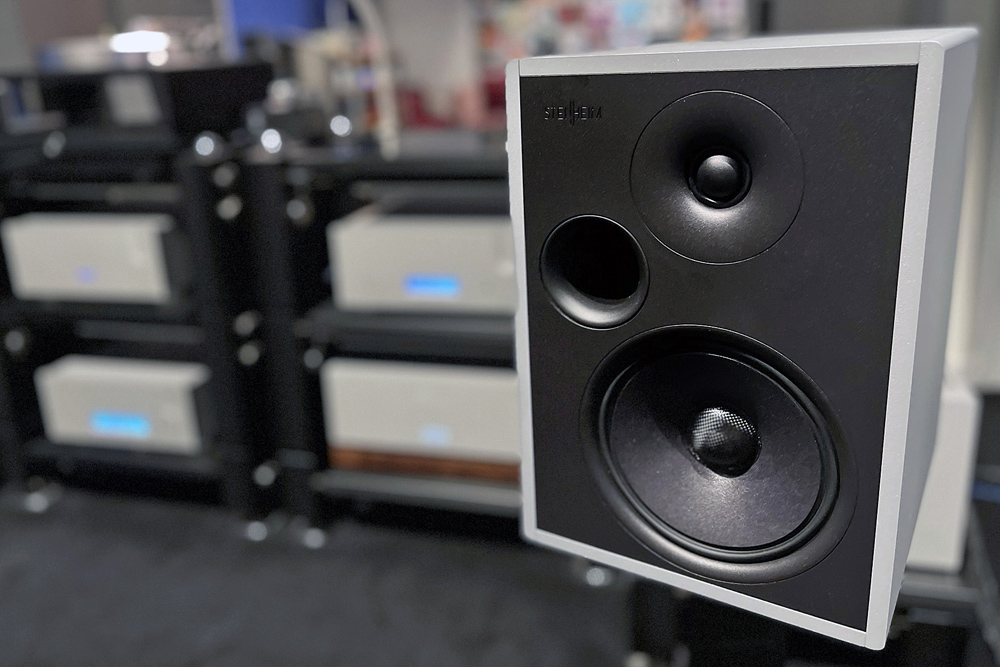
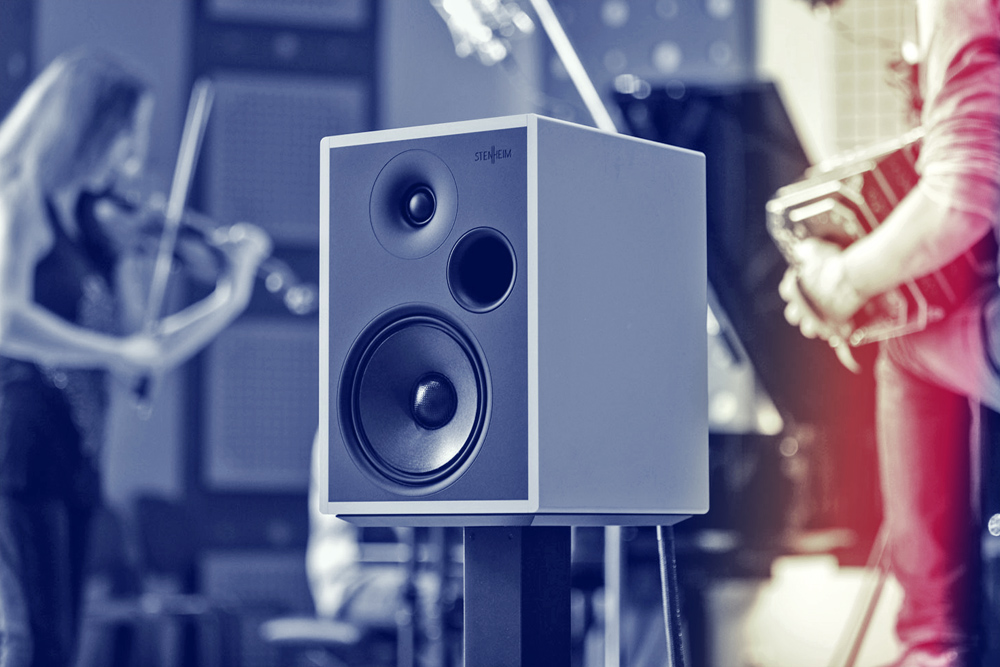
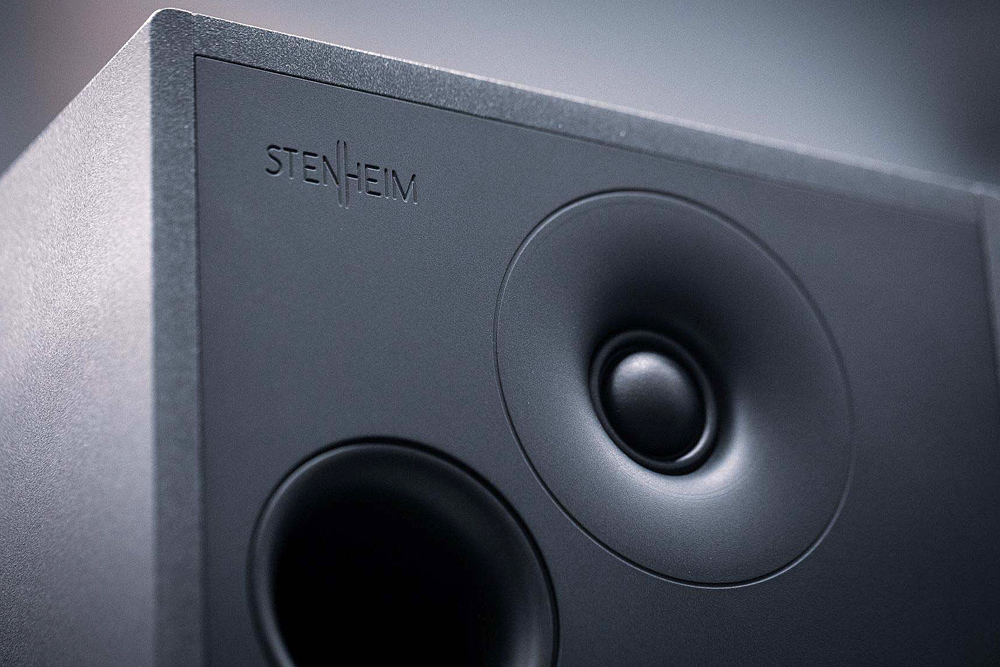
Inside, Stenheim has treated aluminium’s inherent resonant tendencies with military precision — heavy internal damping, intelligently braced panels, and driver mounting from the rear for an uninterrupted front baffle. The finish is seamless, surgical The drivers themselves? A 25mm soft dome tweeter housed in a shallow horn for controlled directivity, paired with a 165mm resin-damped cellulose mid-bass driver anchored to a front-facing reflex port. That combination gives you speed without glare, body without bloom, and extension that feels bigger than it has any right to The SE crossover is where things get borderline obsessive. Stenheim hand-picks components from Mundorf, Jantzen, Audyn, Myflex, and Jupiter — boutique names with price tags to match. Internal wiring is proprietary. Binding posts are upgraded. Everything screams deliberate intent.
On paper, you get 93dB sensitivity, 4-ohm impedance, and 200W peak handling — meaning they’ll happily sing on modest amps but bloom into something extraordinary when paired with serious power. My Mark Levinson 300W monoblocs were made for these, and together, they turned my room into a cathedral.
Subwoofers: Completing the Picture
Let’s get this straight: the Alumine Two SEs are magnificent on their own. In a small to medium-sized room, they’ll give you 90% of the full picture. But pair them with properly integrated subs — in my case, dual REL No.31s — and the world tilts on its axis. Suddenly, you’re not listening to speakers anymore. You’re standing inside the recording.
A well-blended sub isn’t about adding bass; it’s about unlocking time and space. The soundstage doesn’t just expand — it blooms. Height, width, depth, and weight fall into perfect proportion. Dua Lipa’s “Don’t Start Now” transformed into a full-scale dancefloor assault, while Kidburn’s “Insomnia” unfurled layers of synth-pop atmosphere like an 80s fever dream pulled straight from celluloid. This pairing didn’t just elevate performance. It redefined it.
Listening, Rediscovered
After years of designing studios, producing music, and obsessing over signal chains, I thought I was immune to being surprised by speakers anymore. The Stenheims made me wrong. For the first time in a long time, I stopped thinking about the gear. I stopped auditioning, stopped comparing, stopped cataloguing microdetails like a forensic analyst. I just… listened. These speakers reminded me why I fell in love with music in the first place.
Luxury, Justified
Yes, they’re expensive. Yes, Stenheim builds them in Switzerland, where labour costs are high and precision is non-negotiable. But this isn’t about value. This is about craft. These are low-volume, high-art instruments designed for listeners who demand nothing short of truth. Are they twice as good as Bowers & Wilkins 805 D4s at half the price? Probably not. But that’s not the question to ask. The real question is this: Do they give you an experience that makes you forget the money? For me, absolutely.
Verdict
If you’re lucky enough to afford them, buy them. If you can’t find a dealer, book an hour, and sit with them anyway. You’ll walk out changed. The Stenheim Alumine Two SE isn’t about spectacle. It isn’t about ego. It’s about purity — the pursuit of uncoloured truth rendered with Swiss precision and poetic restraint. For those who get it, these aren’t just loudspeakers. They’re instruments. They’re scalpel-sharp windows into the soul of recorded music.
And when you hear them set free, you’ll understand.