

Category:
MUSIC FEATURES
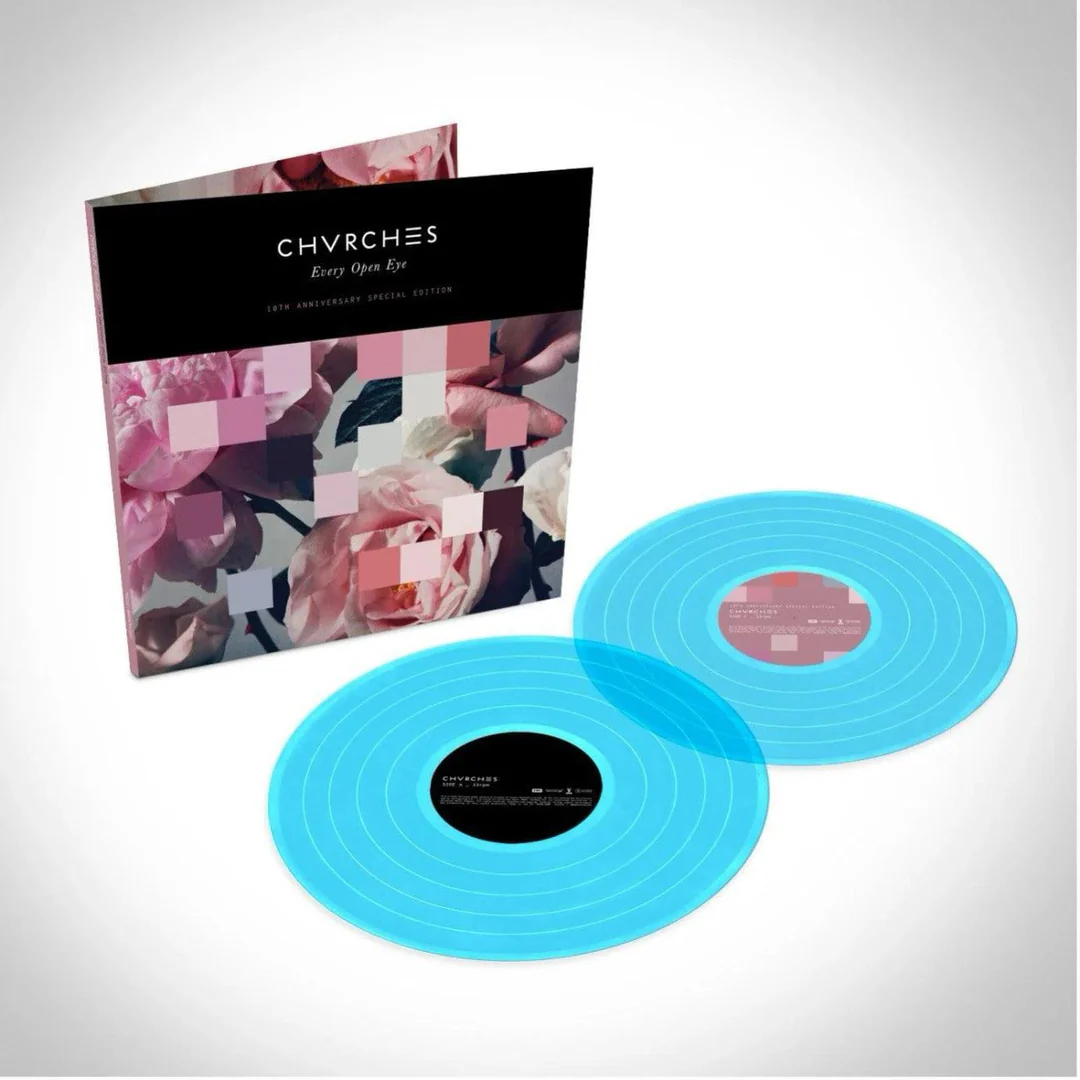
“Every Open Eye Turns Ten: CHVRCHES’ Synth-Pop Masterpiece Still Shines”
A decade on, Glasgow’s electronic trio proves that shimmering synths, emotional honesty, and fearless production aren’t just compatible—they define modern pop.
Ten years. A hundred thousand synth lines. Millions of voices lifted in the chorus of Clearest Blue. Every Open Eye, CHVRCHES’ sophomore triumph, isn’t just an album—it’s a heartbeat stretched across a decade, a luminous statement of vulnerability, joy, and cathartic release. The 10th Anniversary Edition reintroduces us to a record that shaped the sound of the 2010s and continues to ripple through the electronic pop landscape of today.
The Album’s Arrival
When CHVRCHES emerged from Glasgow in 2011, the world had already begun to take notice of The Bones of What You Believe, their glittering debut that seamlessly melded indie sensibilities with electronic precision. But it was Every Open Eye that proved the trio weren’t just a flash in the synth-pop pan—they were architects of a sound that combined emotional honesty with physicality: danceable yet introspective, polished yet raw.
From the first notes of Leave a Trace, the album asserts itself as a work of meticulous construction. The synths shimmer like glass under stage lights, tight percussion drives every beat forward, and Mayberry’s vocals cut with crystalline clarity. It’s a statement of intent: this is a band confident in its vision, unafraid to blend melancholy with euphoria, intimacy with spectacle.

Ten Years Later: Why It Endures
So, why does Every Open Eye still feel urgent, vibrant, and essential ten years after its release? The answer lies in its emotional architecture. While synth-pop can often lean on glossy surfaces, CHVRCHES built tracks like Clearest Blue and Never Ending Circles on dynamic tension. Songs swell from quiet reflection to cathartic explosion, mimicking the ebb and flow of real emotion. It’s music that makes you move while simultaneously pulling at something deeper inside—loneliness, longing, or that fleeting, fragile feeling of hope.
The 10th Anniversary Edition deepens that experience. Live tracks, demos, and remixes offer a window into the creative process, revealing not just polished perfection but the human hands, breaths, and stumbles behind the sound. Leave a Trace (Demo Version), for example, is stripped down, raw, and haunting. Without the layers of production, every lyric lands harder; every melodic choice feels deliberate, intimate. You’re reminded that beyond the shimmering synths is a trio with an uncanny sense of narrative in music—songs are not just heard, they are felt.
Expanded Soundscape: Production and Performance
Iain Cook and Martin Doherty’s production is what keeps Every Open Eye from feeling dated. Even a decade later, the album’s sonic textures feel modern: lush pads, kinetic percussion, and shimmering synth lines that never overwhelm. Every sound has space, and every vocal nuance is preserved. Unlike many electronic albums, it’s never sterile. There’s a heartbeat underneath—a human touch in the mechanics of the machine.
Live tracks on this edition highlight another layer of brilliance. CHVRCHES’ performances transform tracks into full-bodied kinetic experiences, from the tension of Clearest Blue (Live 2023), where the song evolves into an almost cinematic climax, to the intimacy of Empty Threat (Remix), reimagined for the dancefloor without losing its emotional core. It’s this duality—personal yet communal—that cements the album’s enduring appeal.


Themes That Resonate
The lyrical content of Every Open Eye is deceptively simple. On the surface, it’s about love, loss, and personal empowerment—but the subtext runs deeper. Tracks like High Enough to Carry You Over explore emotional vulnerability with sophistication rarely seen in mainstream electronic pop. Playing Dead juxtaposes an upbeat tempo with lyrical introspection, a trick CHVRCHES pull off effortlessly throughout the album.
This depth is part of why the record has stood the test of time. It doesn’t rely on fleeting trends or gimmicks. Every chorus, every harmonic layer, every rhythmic choice feels intentional, timeless. The 10th Anniversary Edition makes it clear that the album’s emotional honesty is its strongest hook—it’s music you return to because it still knows how to talk to you.
Cultural Impact and Legacy
In 2015, Every Open Eye wasn’t just an album; it was a statement in a crowded pop landscape. Where other synth-pop acts flirted with nostalgia or novelty, CHVRCHES carved a niche that was emotionally intelligent, musically ambitious, and unafraid to feel. The record influenced a generation of electronic artists, showing that synth-pop could have both brains and heart.
Fast forward ten years: the album is still cited in playlists, streaming charts, and critical retrospectives. Its influence extends beyond music—visual aesthetics, stage design, and even fashion around the band draw on the same neon, geometric, and emotionally resonant language CHVRCHES have perfected.
Listening Today: The 10th Anniversary Experience
Play the anniversary edition at night, headphones on, lights dimmed. Listen to Clearest Blue rise from contemplation to euphoria. Notice the subtle synth textures behind Mayberry’s voice, the quiet moments that make the choruses hit harder. The demos and live versions aren’t just extra content—they’re lessons in songwriting, performance, and the art of balancing emotion with sound.
It’s an album that rewards repeat listening, revealing new layers each time. Ten years in, and the songs still feel alive, still capable of moving you in ways that few contemporary albums can.
Verdict:
Every Open Eye at ten years old isn’t just a relic; it’s a living, breathing statement of why CHVRCHES continue to define electronic pop. With the 10th Anniversary Edition, we don’t just revisit a classic—we rediscover it, stripped, expanded, and reimagined, proving that synths, emotion, and human intuition can coexist to create something timeless.
Score: 9.5/10 – A decade in, the glow hasn’t faded; the grit remains, and CHVRCHES’ masterpiece continues to shine, dazzling both the heart and the body.
The Spirit Of Radio…..
There was a time when radio mattered. It wasn’t just background noise. It was culture. A living, breathing beast that growled with soul and sweat and electricity. The late-night host was your shaman. The crate-digging DJ was your lifeline. The airwaves pulsed with discovery — blues from the Delta, punk from a squat in Brixton, jazz from smoke-thick cellars, hip-hop breaking free from block parties in the Bronx.
If you were alive in the ‘80s or ‘90s, you remember. You felt it.
But that world is gone. Ashes. Today’s radio is a corpse in a cheap suit, dragged through the motions by men who mistake content for culture and metrics for meaning. What was once an underground current of rebellion and connection has been smothered beneath a wet blanket of corporate mediocrity and glossy, soulless commercial trash.
Let’s not pretend this was accidental.
Radio was murdered.
Slowly. Publicly. Without shame.

The Real Killers
Let’s talk about the real villains here — the broadcast monoliths that gutted the industry from the inside out. ARN. SCA. iHeart. And the global clones infecting frequencies across continents.
These aren’t broadcasters. They’re accountants with jingles.
Over the past two decades, they’ve appointed themselves gatekeepers of the airwaves, slapping together management teams with all the creative instincts of a tax return. Grey-faced, risk-averse, and artistically barren, these executives wouldn’t know soul if it bit them in their Bluetooth earpieces.
They’ve turned stations into advertising slot machines. Music has been replaced by noise, curated by AI, scheduled by algorithms, and endorsed by brands no one believes in. The DJ is now a voice-tracked phantom, the program director a PowerPoint junkie.
And the worst part? They think this is working.
They’re selling their own Kool-Aid while the audience drifts toward Spotify, podcasts, TikTok — anything that feels even remotely alive.
Shock Jocks and the Cultural Strip-Mining of Society
But if corporate suits are the termites chewing through the floorboards, shock jocks are the ones setting fire to the damn building.
You know the type. Morning zoo clowns and controversy merchants vomiting performative outrage across the nation. Soulless, tasteless circus barkers who build entire careers around screaming louder, dumber, and meaner than the next guy.
This isn’t radio. It’s cultural strip-mining.
They don’t elevate discourse. They don’t inspire thought. They pollute. They rape the very fabric of society with every snide headline grab, every fake feud, every cheap, attention-starved stunt designed to feed a broken ratings system. They erode empathy. They normalise cruelty. They sell bigotry, misogyny, and ignorance in exchange for one more click and another minute of airtime.
And the networks?
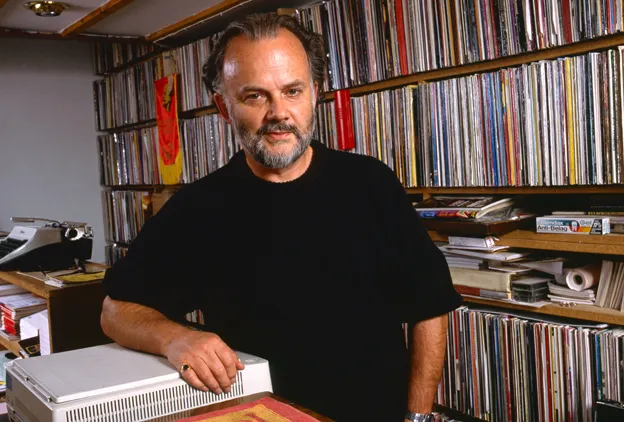
They love them. They enable them. They bank on the outrage. It’s blood money in a business that once gave us John Peel, Howard Stern at his best, Triple J in its golden age, and pirate stations that changed history. Now it’s toilet humour, fake phone-ins, and “who said what” trash.

The Epitaph: A Culture Betrayed
Let’s just say it:
Here lies radio.
Killed by cowards. Betrayed by mediocrity. Abandoned by the culture it once created.
The mic was live. The spirit was strong. The suits sold it out.
The artists are gone.
The curators are silenced.
The listeners — the real ones — have tuned out.
All that’s left are endless loops, washed-up egos, and ad men trying to squeeze blood from a fossilised playlist.
This isn’t evolution. It’s extinction with branding.
The Fight for Something Real
But here’s the thing: culture doesn’t die. It migrates. It mutates. It goes underground.
The soul of radio — of real, human storytelling and musical discovery — is still alive. You just won’t find it on FM anymore. You’ll find it in the basements, back alleys, and bandwidth of the digital world. In pirate streams, in podcast studios, in beat labs, in independent platforms where people still give a damn.
That’s why Noizy Head exists.
We’re not here to play it safe. We’re not here to kiss the ass of advertisers or crank out beige playlists that sound like every other station on Earth. We’re here to disrupt. To reconnect people with what’s real. To remind the world that media, when done right, still has the power to move you — not manipulate you. We believe in tastemakers. In storytellers. In edge.
We believe you can handle more than the garbage they’ve been feeding you.
And we believe it’s time to give the mic back to the ones who still have something to say.
Join the Rebellion
If you’re tired of being shouted at by clowns, sold to by cowards, and spoon-fed soundbites wrapped in branding, you’re not alone.
It’s time to unplug from the machine and find the signal in the noise.
It’s time to rediscover what music, stories, and connection are supposed to feel like.
Radio is dead. But culture isn’t.
And this time, we’re not asking for permission.